
Good governance is central to the effectiveness, credibility, and sustainability of Asian Bridge India (ABI). We are committed to upholding the highest standards of transparency, accountability, and ethical practice in all aspects of our work. Our governance approach ensures compliance with all applicable laws, adherence to organizational values, and the consistent application of best management practices.
Since its inception in 2009, ABI has operated with a participatory and delegated work environment, enabling teams to take ownership while aligning with the organization’s mission and strategic goals. The Board of Trustees provides overall direction, while operational responsibilities are delegated to the Chief Functionary and the management team.
Policies & Governance Mechanisms
ABI functions under a well-defined set of policies and procedures that guide decision-making, resource management, and stakeholder engagement. These include:
- Human Resource Policy
- Financial Management Policy
- Gender Equality Policy
- Child Safeguarding Policy
- Sexual Harassment Prevention Policy
- Data Protection & Retention Policy
- Risk Management Policy
- Monitoring, Evaluation & Learning (MEL) Policy
- Anti-Corruption & Anti-Bribery Policy
All policies are periodically reviewed to ensure relevance, legal compliance, and alignment with emerging development sector standards. Reviews are conducted on the recommendation of the Chief Functionary and management team, and are formally approved by the Board of Trustees.
Organizational Structure
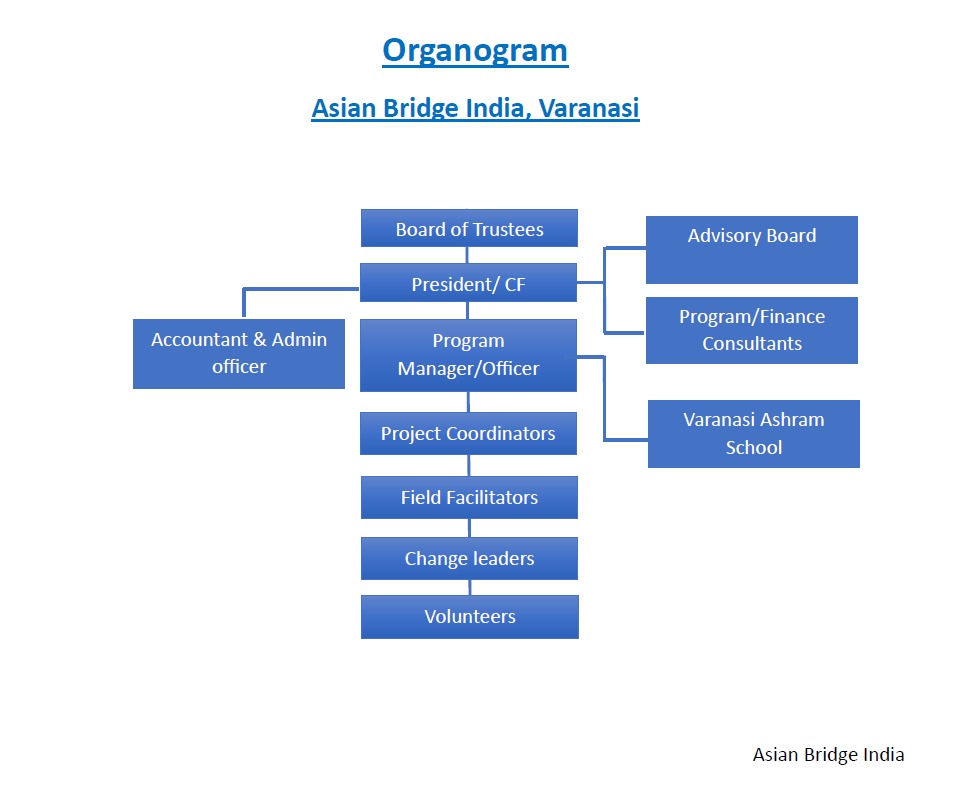
Board of Trustees: The Board of Trustees defines ABI’s vision, mission, and strategic direction. It ensures legal compliance, oversees financial stewardship, and safeguards organizational integrity. The Board meets at least twice a year and reviews progress against strategic objectives. The President, as the Chief Functionary, reports directly to the Board of Trustees.
Advisory Panel: ABI benefits from the guidance of an Advisory Panel made up of independent professionals and subject-matter experts from diverse fields. This panel meets annually to provide insights on emerging issues, sectoral trends, and innovative approaches to advance ABI’s mission.
Management & Program Teams: Day-to-day operations are managed by the Chief Functionary with the support of a Program Management Team consisting of thematic and functional experts. This team meets monthly to review progress, address challenges, and plan activities.
Accountability & Audit Systems
External Audit: ABI undergoes an annual statutory audit conducted by a qualified Chartered Accountant. The audit report is approved by the Board of Trustees and submitted to relevant authorities in compliance with the Indian Trust Act 1882, Income Tax Act, and Foreign Contribution Regulation Act (FCRA) where applicable.
Internal Audit: Internal audits are carried out regularly to check that financial systems, policies, and procedures are being followed properly. They are arranged by management to ensure funds are used correctly, rules are complied with, and operations run smoothly.
Financial & Accounting Practices: ABI’s Finance Department comprises trained accounting professionals. Accounts are maintained using updated computerized systems in accordance with Generally Accepted Accounting Principles (GAAP).
ABI follows the financial year from 1 April to 31 March, while project cycles may vary depending on donor agreements.
:- Financial records are updated daily and reconciled monthly.
:- Reports are prepared in line with project and donor requirements.
:- Separate books are maintained for local and foreign funds, with clear distinction between restricted and unrestricted funds.
Legal & Statutory Compliance
ABI complies with all applicable laws and statutory provisions relevant to Indian NGOs, including but not limited to:
- Indian Trusts Act, 1882 (Registration No. …)
- Income Tax Act, 1961 – including 12A & 80G certifications
- Foreign Contribution Regulation Act (FCRA), 2010 (where applicable)
- Labour laws, environmental regulations, and child protection legislation relevant to our work.
Through strong governance, robust policies, and an unwavering commitment to our values, ABI strives to ensure that every initiative contributes meaningfully to building a more just, equitable, and inclusive society